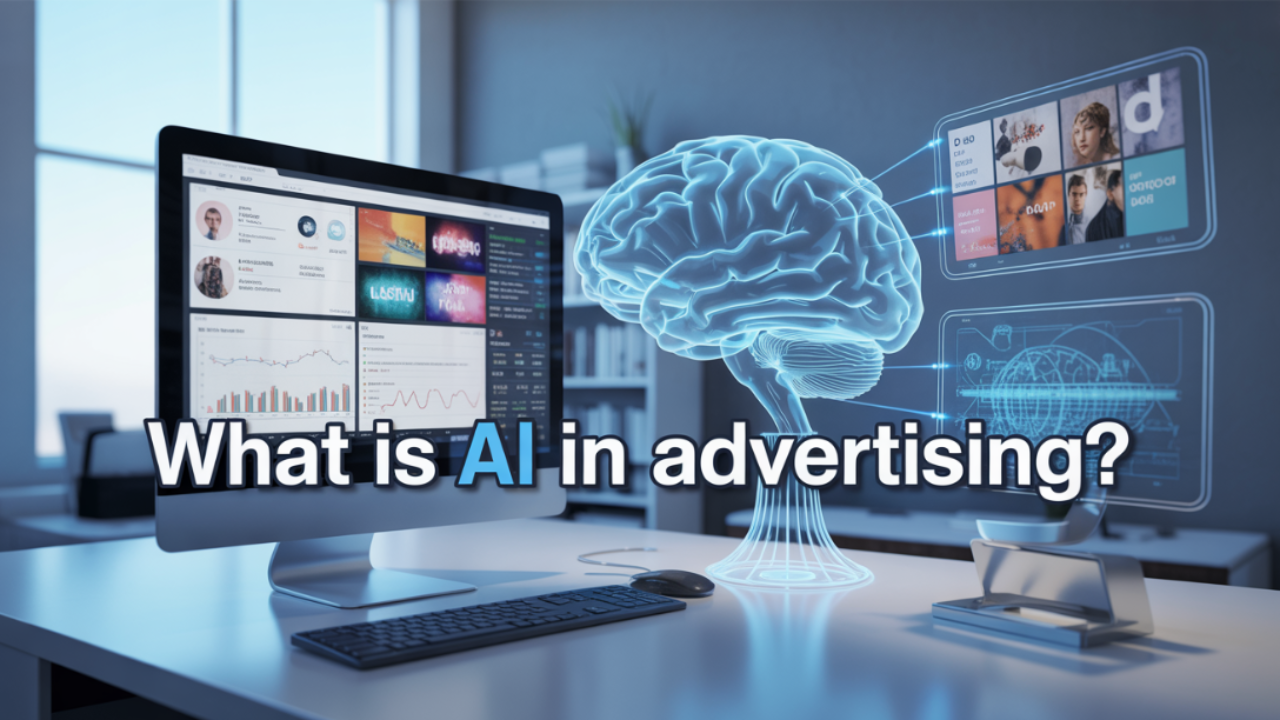

An AI-powered CRM is a customer relationship management system that uses artificial intelligence to analyse customer data, automate tasks, and help businesses make smarter decisions. Unlike a traditional CRM that only stores information, an AI-powered CRM can identify patterns, predict customer behaviour, score leads, personalise messages, and handle routine work automatically.
It acts like an intelligent assistant inside your CRM helping sales, marketing, and support teams work faster, reduce manual work, and give customers a better experience.
How it differs from traditional CRM:
Traditional CRMs are static databases. They store customer information but require humans to analyze it and take action.
AI-powered CRMs are dynamic and intelligent. They can predict which leads are most likely to convert, suggest the best actions for your team, automate follow-ups, and even personalize messages based on customer behavior.
AI adds a layer of intelligence, turning data into real-time insights and decisions, rather than leaving it to humans to interpret manually.
How AI Works Inside a CRM System
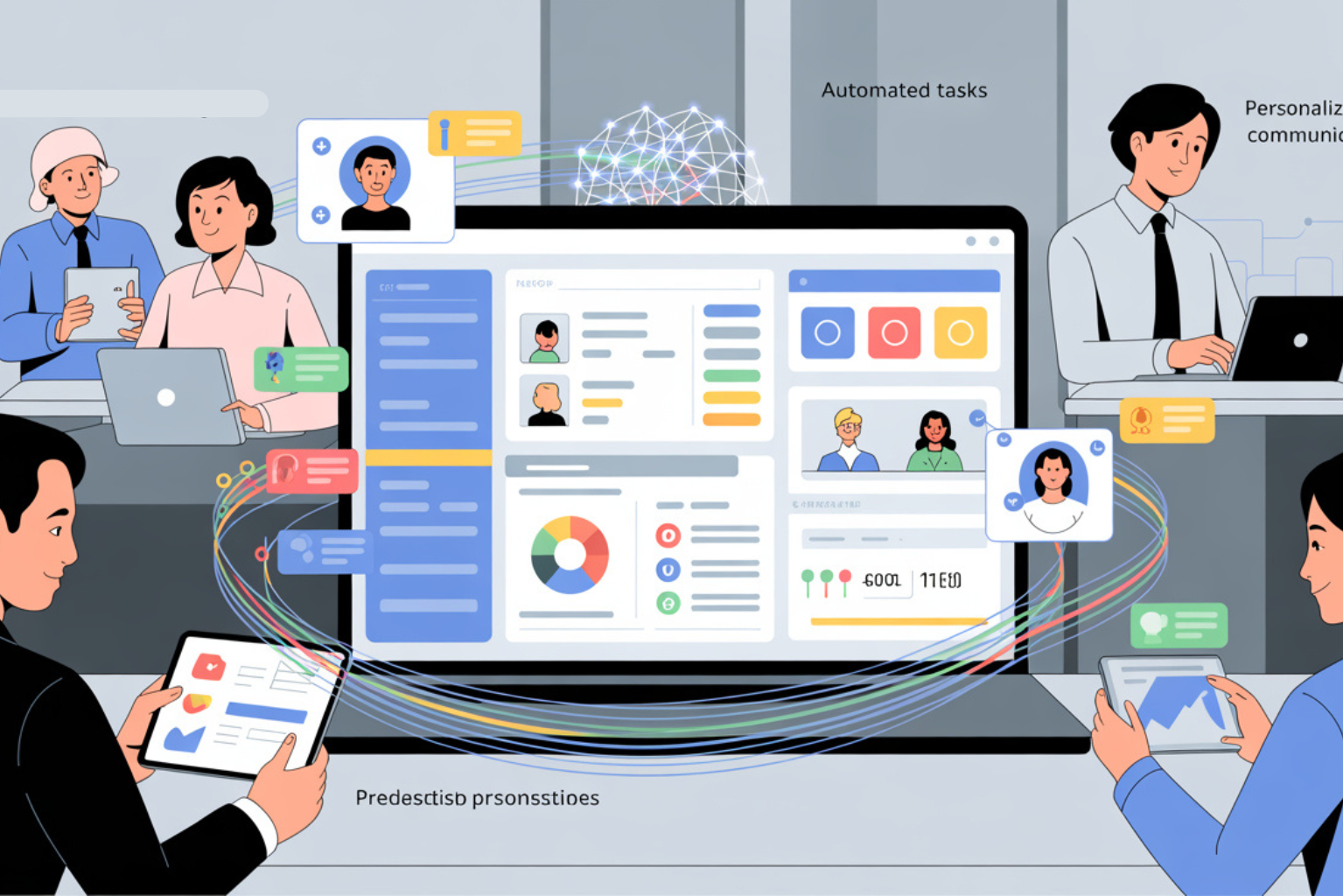
AI has transformed the way CRM systems operate by making sales, marketing, and customer support more intelligent and efficient. One of the key ways AI contributes is through data analysis.
Instead of manually sifting through customer records, AI continuously scans data from multiple sources, identifies patterns, and generates actionable insights. For instance, it can highlight which leads are most engaged or determine which marketing campaigns are performing better, allowing teams to make smarter decisions faster.
Another important function is predictive lead scoring. Traditionally, sales teams would evaluate each lead manually, which is time-consuming and prone to errors. AI automates this process by calculating a score for every lead based on their likelihood to convert. This ensures that sales representatives focus their efforts on high-potential prospects, increasing efficiency and conversion rates.
AI also excels in automation of routine tasks. It can handle repetitive work like sending follow-up emails, scheduling meetings, updating contact information, or generating reports. By taking care of these tasks automatically, AI frees up valuable time for teams to focus on strategic work and customer relationships.
Finally, AI improves personalized communication by analyzing individual customer behavior and recommending tailored emails, messages, or offers. This level of personalization enhances engagement, strengthens customer relationships, and ultimately drives better sales outcomes.
Key Features of an AI-Powered CRM
These features help businesses streamline workflows, increase sales, improve customer experience, and make smarter decisions.
Let’s look at each key feature in detail.
- Lead Scoring and Predictive Analytics

One of the most powerful features of an AI CRM is lead scoring and predictive analytics. AI analyzes your customer data, website interactions, emails, social media activity, and previous sales history to determine which leads are most likely to convert.
It assigns a score to each lead based on their behavior, engagement, and likelihood to buy.
This allows sales teams to prioritize the most promising prospects, saving time and increasing the chance of closing deals. Predictive analytics also helps forecast future customer behavior, allowing businesses to plan marketing campaigns more effectively.
- Task and Workflow Automation

One of the most powerful features of an AI CRM is lead scoring and predictive analytics. AI analyzes your customer data, website interactions, emails, social media activity, and previous sales history to determine which leads are most likely to convert.
It assigns a score to each lead based on their behavior, engagement, and likelihood to buy.
This allows sales teams to prioritize the most promising prospects, saving time and increasing the chance of closing deals. Predictive analytics also helps forecast future customer behavior, allowing businesses to plan marketing campaigns more effectively.
Sales Forecasting

AI-powered CRMs also excel at sales forecasting. By analyzing past sales data, current trends, and market conditions, AI predicts future revenue, sales growth, and potential opportunities. This helps managers make better decisions about resource allocation, sales strategies, and marketing campaigns. With accurate sales forecasts, businesses can plan for growth, avoid overestimating targets, and identify areas that need improvement.
- Customer Support Automation (Chatbots & AI Assistants)

Customer support is another area where AI shines. Many AI CRMs include chatbots and AI assistants that can handle common customer queries 24/7, provide product information, or guide customers through processes. This not only improves response times but also reduces the workload on support teams. AI assistants can even escalate complex issues to human agents when needed, ensuring seamless support and better customer satisfaction.
Reporting and Insights

Finally, AI-powered CRMs provide advanced reporting and insights. Instead of manually analyzing data, AI can generate real-time reports on sales performance, marketing effectiveness, and customer behavior.
These insights allow businesses to identify trends, measure ROI, and make informed decisions quickly. With AI-driven reporting, companies can spot opportunities, address issues proactively, and continuously improve their strategies.
Benefits of Using an AI-Powered CRM
- Saves Time: It automates daily tasks like emails, reminders, and data entry so your team can work faster.
- Improves Focus: It lets teams focus on important tasks instead of doing routine or boring work.
- Better Lead Quality: It finds high-quality leads using predictive scoring, so you know who is most likely to buy.
- Higher Conversions: It increases sales by helping teams focus on the right prospects at the right time.
- Personalized Messaging: It sends messages that match each customer’s behavior, interest, and needs.
- More Engagement: It recommends the best content and offers, helping customers stay active and engaged.
- Stronger Relationships: It builds trust by giving customers a more personalized and friendly experience.
- Better Decisions: It provides real-time insights that help you make smarter business decisions.
- Sales Trends: It shows which sales or marketing strategies work best, helping you plan ahead.
Popular AI-Powered CRM Software
Several software options now include AI capabilities to automate tasks, provide actionable insights, and improve customer engagement. Here are some of the most popular AI CRMs available today:
#1. ZOHO CRM
#2. HUBSPOT CRM
#3. SALESFORCE
#4. FRESHSALES
#5. PIPEDRIVE
Zoho CRM:

Zoho CRM is a widely used platform that combines traditional CRM functionality with AI-powered features. Its AI assistant, Zia, can analyze customer data, predict sales trends, score leads, and even suggest the best times to contact prospects.
Zoho CRM also offers automation tools for emails, workflows, and follow-ups, making it ideal for small to mid-sized businesses.
Pricing starts with affordable plans and scales according to features, making it flexible for growing companies.
Hubspot CRM:
HubSpot CRM is a popular choice for businesses of all sizes. Its AI capabilities help with lead scoring, predictive analytics, and personalized communication. HubSpot’s AI can automate repetitive tasks like sending follow-up emails, logging activities, and creating reports.
The platform also integrates marketing, sales, and customer support, giving teams a complete view of the customer journey. HubSpot offers a free plan for basic CRM needs, with paid tiers adding advanced AI features and marketing automation.
SalesForce CRM:
Salesforce Einstein is Salesforce’s AI solution that works across its CRM platform. It provides intelligent recommendations for sales, marketing, and customer service, helping teams forecast opportunities, prioritize leads, and automate workflows.
Einstein can analyze customer interactions, predict buying behavior, and deliver insights to optimize campaigns. Salesforce is highly scalable and suitable for large enterprises that need advanced AI-driven CRM capabilities.
Freshsales AI:

Freshsales AI, part of the Freshworks suite, focuses on predictive analytics and automation. Its AI features include lead scoring, activity tracking, and insights into customer behavior. It helps sales teams identify high-value opportunities and automate routine tasks, such as follow-up reminders and data entry. Freshsales AI is designed to streamline workflows, reduce manual work, and improve overall sales productivity.
Pipedrive:
Pipedrive is an easy-to-use and highly effective CRM designed to help sales teams close deals faster and smarter. It allows businesses to visualize their entire sales pipeline, optimize leads, and manage deals efficiently with built-in AI features. By automating repetitive tasks, sending reminders, and providing advanced sales insights, Pipedrive saves teams time and ensures no follow-up is missed.
With over 500 integrations, it seamlessly fits into existing workflows and helps track both individual and team performance.
Trusted by more than 100,000 companies in 179 countries, Pipedrive is GDPR-compliant and secure, making it a reliable choice for businesses of all sizes looking to improve sales efficiency and grow revenue.
Challenges and Considerations
While AI-powered CRMs offer many benefits, there are some challenges businesses need to consider before fully adopting them. Data privacy and security is a top concern. AI systems rely on large amounts of customer data to provide insights and predictions, so companies must ensure that sensitive information is stored securely and handled according to privacy regulations.
Another challenge is training and adoption by teams. Employees need to learn how to use the AI features effectively. Without proper training, teams might underutilize the system or rely on it incorrectly, which can reduce its effectiveness.
Choosing the right AI features is also important. Not every AI tool is necessary for all businesses, and selecting the wrong features can lead to wasted time, effort, and resources. Companies need to focus on AI functions that align with their sales, marketing, and support goals.
Finally, it’s essential to avoid over-automation. While automating repetitive tasks saves time, relying too heavily on AI can make customer interactions feel impersonal. A balance between automation and human touch is necessary to maintain strong relationships with clients.
Conclusion:
An AI-powered CRM is more than simply a tool for storing customer information; it functions as a smart assistant for your sales, marketing, and support teams. It enables you to analyze data, forecast consumer behavior, automate regular operations, and deliver tailored experiences that significantly improve customer relationships.
The advantages are obvious: you save time, decrease errors, enhance sales conversions, and make more informed decisions based on actual data. Whether you’re a small business owner, a marketer, or a member of a sales team, AI CRM can help you manage clients and expand your firm.
If you haven’t tried one yet, I recommend looking at AI-powered CRM options such as Zoho CRM or Pipedrive. Begin small, try its features, and see how it might make your job easier and your customers happy. Take the first step today and explore how AI may benefit you.